What are the consequences - in terms of religious practice and ethics - of the common Islamic and Christian conviction that God gives humans (both men and women), of all creatures, a particular dignity? Who are some thinkers in your tradition who develop this idea? In your faith tradition - in the Qur'an, the hadith, the Bible, the lives of the saints or imams- what are examples or stories that show the dignity of men and women? How does your faith promote gender and gender rights, especially on the question of women empowerment? How do your scholars and practitioners address the topic of gender discrimination and gender equality?
The Second Dialogue: A Dialogue on Gender took place on Tuesday, March 11th from 7:30 am - 9:00 am (est) with participation by invitation only. Anyone is welcome to view the conversation at the following video.
Dr. Mahan Mirza, University of Notre Dame, is a teaching Professor of Islam & Science in the Keough School of Global Affairs and Executive Director of the Ansari Institute for Global Engagement with Religion at the University of Notre Dame. Mirza holds a BS in Mechanical Engineering from University of Texas Austin, MA from Hartford Seminary in Islamic Studies and Christian-Muslim Relations, and PhD in Religious Studies from Yale University. Dr. Mirza has edited two special issues of The Muslim World and served as assistant editor of the Princeton Encyclopaedia of Islamic Political Thought.
Dr. Banafsheh Keynoush, University of Notre Dame, is a Scholar in Residence at the Kroc Institute for International Peace Studies at the University of Notre Dame. She is the author, co-author and editor of four recently published books including Saudi Arabia and Iran: Friends or Foes? (2016) and The Abraham Accords: National Security, Regional Order and Popular Representation (2024). Her latest project is a forthcoming book chapter that focuses on critical discourse analysis of the Iranian Shia influence in the Middle East. Previously, she was an interpreter at a Catholic-Shia dialogue series event that convened in Europe from 2008 to 2019.
Dr. Gabriel Said Reynolds, University of Notre Dame, completed his PhD at Yale University in Islamic Studies. He is the author of The Qur'ān and Its Biblical Subtext (Routledge 2010) and The Emergence of Islam (Fortress, 2012), the translator of ʿAbd al-Jabbar’s Critique of Christian Origins (BYU 2008), and editor of The Qur'ān in Its Historical Context (Routledge 2008) and New Perspectives on the Qur'ān: The Qur'ān in Its Historical Context 2 (Routledge 2011). In 2018 he published The Qurʾan and the Bible with Yale University Press and in 2020 Allah: God in the Qur'an, also with YUP. He runs a youtube channel, “Exploring the Qur’an and the Bible” that features conversations on scripture with leading scholars.
Dr. Ann W. Astell, University of Notre Dame, is the John Cardinal O'Hara Professor of Theology at the University of Notre Dame. She is the author of seven books, most recently The Saint's Life and the Senses of Scripture: Hagiography as Exegesis (2024), and the editor or co-editor of seven collections of essays, most recently Saving Fear in Christian Spirituality (2020).
Dr. Rocío Cortés-Rodríguez, Pontificia Universidad Católica de Chile, is an assistant professor in the Department of Theology. She specializes in interreligious dialogue, focusing on the interactions between Christianity, Judaism, Islam, and Indigenous religious traditions. Throughout her academic career, Rocío has explored the complex dynamics of coexistence in religiously diverse contexts. In 2019, she introduced the Scriptural Reasoning methodology in Chile, an innovative method of interfaith dialogue that has fostered new opportunities for mutual understanding and collaboration among faith communities. Since 2022, Rocío has served on the board of the Association for Interreligious Dialogue (ADIR) in Chile. Her research and public engagement reflect a deep commitment to amplifying women’s voices in theological discourse and exploring their contributions to religious traditions.
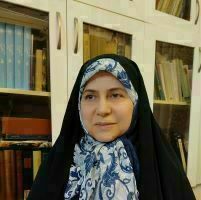
Dr. Mahya Saffarinia, Imam Sadigh University, (Tehran, Iran), holds both an Ms and a PhD and is educated in international relations, international law, and human rights law. She is a faculty member of the Law Group at Imam Sadigh University and, in addition, is regularly invited to give lectures at other Iranian universities on the topics of international organizations, international law, women’s rights, children’s rights, family law, and human rights law. She is a writer and translator of books and articles including Family in International Instruments: Rights and Duties, Achievements and Challenges (course textbook) and OHCHR: Handbook on National Human Rights Plans of Action (translation). Dr. Saffarinia has extensive experience working with various civil society organizations in Iran, providing ongoing consultancy to some of them and representing them in international forums.