Religion and Global Politics across Disciplines and Publics: Biographies
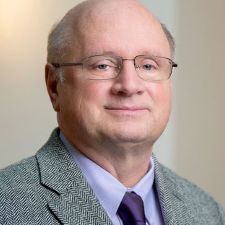
Scott Appleby, University of Notre Dame
Scott Appleby is the Keough-Hesburgh Professor of Global Affairs and interim director of the Ansari Institute for Global Engagement with Religion in the Keough School of Global Affairs at the University of Notre Dame. From 2014 to 2024 he served as the Marilyn Keough Dean of the Keough School. As the school’s founding dean, he led the establishment and growth of Notre Dame’s first new school in a century.
Previously, Appleby directed Notre Dame’s Cushwa Center for the Study of American Catholicism and the Keough School's Kroc Institute for International Peace Studies. The author or editor of 15 books, Appleby examines the ways religions and religiously inspired actors shape and are shaped by modern ideas, institutions, practices and conflicts. His publications include The Ambivalence of the Sacred: Religion, Violence and Reconciliation, The Oxford Handbook of Religion, Conflict and Peacebuilding, and the five volumes of The Fundamentalism Project, which he edited with Martin E. Marty.
Appleby has written extensively about American religious history, Catholicism in the United States, and strategic peacebuilding around the world. Among other media appearances, he was called to offer public commentary on 9/11 and on the clergy sexual abuse crisis in Roman Catholicism. A fellow of the American Academy of Arts and Sciences and of the American Academy of Political and Social Sciences, Appleby is the recipient of five honorary degrees.
He holds a Ph.D. and an M.A. from the University of Chicago and a B.A. from the University of Notre Dame.
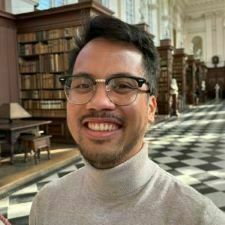
Jethro Calacday, Cambridge University
Jethro A. E. A. Calacday is an Ansari Institute global fellow and a scholar of global history whose research explores the entanglement of religion and empire in the making of the modern world. He works on the histories of the US in the World, the Philippines, Papal diplomacy, global Catholicism, and Southeast Asia. His first monograph-in-progress, Catholic Empire: The American Colonial State and the Roman Catholic Church in the Transimperial Philippines, examines how the Roman Catholic Church facilitated the rise of US empire following the Spanish-American War of 1898. His scholarly works have appeared and are forthcoming in the Journal of Church and State, Diplomatic History, Church History, Philippine Studies: Historical and Ethnographic Viewpoints, H-Net, and Saysay: The Journal of Bikol History. He was recently elected as the Schulman Research Fellow in History at Trinity Hall, Cambridge.
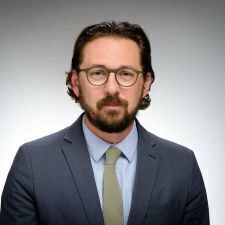
Joel Day, University of Notre Dame
Joel Day is Managing Director of the University of Notre Dame’s Democracy Initiative. He is a scholar-practitioner who brings over 20 years of leadership experience in government, nonprofits, and political campaigns. He previously served as department director at the city of San Diego where he oversaw several public safety initiatives. In 2020, he was appointed Senior Advisor for COVID-19 Response and Recovery, helping stand up the nation’s largest emergency homeless shelter, coordinating regional public health policy, and managing continuity of operations for a workforce of 11,000. Day has also served as staff or advisor for numerous U.S. presidential, senatorial, and congressional campaigns, and as COO/CFO for an anti-trafficking nonprofit.
Day most recently held the position of Senior Fellow and Director of Research at Princeton University's Bridging Divides Initiative, where he worked to count and counter events of political violence in the U.S. His research on political violence, democratic pluralism, and religious ideology led to fieldwork in the West Bank settlements, with former civil war combatants in Sierra Leone, and with cities countering extremism and hate throughout Europe and the United States. This research has been published in the Journal of Democracy, Journal of Peace Research, Politics and Religion, Foreign Policy, Perspectives on Terrorism, Review of Faith and International Affairs, Small Wars Journal, and Journal of Strategic Security. His research findings or commentary have been featured by Newsweek, NPR, Forbes, The Washington Post, The Atlantic, The Hill, the LA Times, CNN, and more. The American Political Science Association recently awarded Day the prize for “best article” in Religion & Politics.
Day holds a Ph.D. in international and comparative politics from the University of Denver Korbel School of Global and Public Affairs.

Andrew Dickson, University of Sussex
Andrew Dickson is an Ansari Institute Global Fellow and recently completed an ESRC-funded PhD in International Relations at the University of Sussex, where he served as program coordinator for the University's Religion and Foreign Policy Initiative. His research explores religion and secularism in International Relations across foreign and development policy, de-radicalization programs, and human rights advocacy. He also holds an MA in Conflict, Security and Development from King’s College London, and a BA in Philosophy, Politics and Economics from Hertford College, Oxford. He was previously center manager for the LSE Faith Centre and Religion and Global Society Research Unit, and Research and Projects Manager for the Lokahi Foundation.

Fr. Emmanuel Katongole, University of Notre Dame
Emmanuel Katongole is professor of theology and peace studies in the Keough School of Global Affairs at the University of Notre Dame. A Catholic priest ordained by the Archdiocese of Kampala, Uganda, he is a core faculty member of the Keough School's Kroc Institute for International Peace Studies.
Katongole is the author of books on the Christian social imagination, the crisis of faith following the genocide in Rwanda, and Christian approaches to justice, peace, and reconciliation. His most recent book is Who Are My People? Love, Violence, and Christianity in Sub-Saharan Africa (Notre Dame Press) which won first place honors from the Catholic Media Association in the category of Gender Issues–Inclusion in the Church.
Katongole’s other books include Born From Lament: On the Theology and Politics of Hope in Africa (Eerdmans, 2017); The Journey of Reconciliation: Groaning for A New Creation in Africa (Orbis, 2017); The Sacrifice of Africa: A Political Theology for Africa (Eerdmans, 2010); Stories from Bethany: On the Faces of the Church in Africa (Paulines, 2012); Mirror to the Church: Resurrecting Faith after Genocide in Rwanda (Zondervan, 2009); and Reconciling All Things: A Christian Vision for Justice, Peace and Healing (co-authored with Chris Rice, Resources for Reconciliation, 2008). Katongole also contributes research to Contending Modernities, a cross-cultural research and education initiative examining Catholic, Muslim and secular forces in the modern world.
Katongole is also a co-founder and director of Bethany Land Institute in rural Uganda. At this institute, he advances the vision of "integral ecology” as proclaimed in Pope Francis’ 2015 encyclical Laudato Si.’ The institute offers a two-year program in regenerative agriculture and entrepreneurship aimed at addressing poverty and environmental degradation.
Katongole earned a Ph.D. in philosophy from the Catholic University of Louvain, undergraduate degrees in philosophy and in theology (Urbaniana, Rome) and a diploma in theology and religious studies from Makerere University in Kampala, Uganda

Jacob Katumusiime, University of Johannesburg
Jacob Katumusiime is an Ansari Institute Global Fellow and a postdoctoral fellow at the University of Johannesburg. Jacob is the 2024 Winner of the Rahamon Bello Award for the Best PhD in African and Diaspora Studies. He researches on the intersections of culture and politics, navigating questions of colonialism, postcolonialism and decolonization, and exploring issues of identity, citizenship, social movements, political violence and diasporic lives. Jacob holds an Interdisciplinary PhD in Social Studies, a Master of Philosophy in Social Studies and a Bachelor of Arts with Education (First Class) from Makerere University, Uganda.

Thahir Jamal Kiliyamannil, SRM University- Andhra Pradesh
Thahir Jamal Kiliyamannil is an Ansari Institute Global Fellow who holds a PhD from the University of Hyderabad, India. His research traces the minoritization of Muslims in India, examining Muslim engagements with the state, sovereignty, and law in colonial and postcolonial contexts in South India. He is presently working on his first monograph, tentatively titled Formations of Minority: Afterlives of Law, Governance, and Colonial Sovereignty in India, which examines how Muslim political subjectivity in India was transformed through shifting configurations of sovereignty from the precolonial period to the colonial and postcolonial nation-state, engaging with the ongoing debates concerning religion and politics in South Asia and beyond. He was formerly a COMPOSE Fellow (2025) at Universitas Islam International Indonesia, a DAAD PhD Visiting Fellow (2022) at the Centre for Modern Indian Studies, University of Göttingen, and an Erasmus Fellow (2021) at the Berlin Graduate School of Muslim Cultures and Societies, Freie Universität Berlin. Currently, he serves as an Assistant Professor at SRM University-AP, India.

Dina Osama Lotfy, Cairo University
Dina Osama Lotfy is an Ansari Institute Global Fellow currently serving as an Assistant Professor of Political Science at Cairo University. Her research focuses on autocratic transitions, religion and politics, and terrorism. She earned her B.A., M.Sc., and Ph.D. in Political Science from Cairo University. Her work has also been published in several leading international journals, such as Democratization, Government and Opposition, and Politics and Religion. She developed strong quantitative and analytical skills through her participation in the 2022 ICPSR Summer Program in Quantitative Methods for Social Research, held at the University of Michigan–Ann Arbor, United States. She also earned the Best Doctoral Dissertation Award in the field of political science and African studies from the Kemet Boutros Ghali Foundation for Peace and Knowledge, Cairo, Egypt.

Peter Mandaville, Georgetown University
Peter Mandaville is Senior Fellow and Director of the Strategic Religious Engagement (SRE) Hub at Georgetown University’s Berkley Center for Religion, Peace & World Affairs. He is also professor of international affairs in the Schar School of Policy and Government and director of the AbuSulayman Center for Global Islamic Studies (ACGIS), both at George Mason University. From 2024-25, he served as the director of the Center for Faith-Based and Neighborhood Partnerships and senior advisor for faith engagement at the United States Agency for International Development (USAID).
From 2022-24 he was senior advisor for religion and inclusive societies at the United States Institute of Peace (USIP). His prior government experience includes serving as a member of the U.S. State Department's Policy and Planning Staff (2010-12) and as a senior advisor in the Secretary of State's Office of Religion and Global Affairs (2015-16). Previous affiliations have included the Brookings Institution, the Pew Research Center, and the Center for Strategic and International Studies (CSIS).
Mandaville is the author or editor of The Geopolitics of Religious Soft Power (2023), Wahhabism and the World (2022), Islam & Politics (Third Edition, 2020) and Transnational Muslim Politics: Reimagining the Umma (2001), as well as many journal articles, book chapters, and op-ed/commentary pieces in outlets such as the International Herald Tribune, the Guardian, the Atlantic and Foreign Policy. He has testified multiple times before the U.S. Congress on topics including political Islam and human rights in the Middle East. His research has been supported by the John D. and Catherine T. MacArthur Foundation, the Carnegie Corporation of New York, the National Endowment for the Humanities, and the Henry Luce Foundation. He is a life member of the Council on Foreign Relations (CFR).
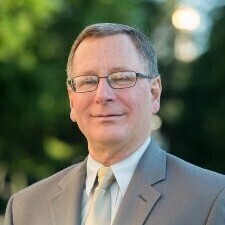
Timothy Matovina, University of Notre Dame
Timothy Matovina is a Professor in the Theology Department at the University of Notre Dame. He works in the area of faith and culture, with specialization in U.S. Catholic and U.S. Latino/a theology and religion. His teaching and research underscore the need to consider the social contexts and concrete expressions of faith out of which the search for theological understanding arises.
Professor Matovina has authored over 150 essays and reviews in scholarly and opinion journals. He has also written or edited 24 books, among them Latino Catholicism: Transformation in America’s Largest Church, which won five book awards, including selection as a CHOICE “Outstanding Academic Title,” as well as Theologies of Guadalupe: From the Era of Conquest to Pope Francis. Among his various scholarly awards, in 2010 Matovina received the Virgilio Elizondo Award “for distinguished achievement in theology, in keeping with the mission of the Academy” from the Academy of Catholic Hispanic Theologians of the United States (ACHTUS).
At Notre Dame he has won two teaching awards, including the Julian Samora Award that members of Notre Dame’s La Alianza student organization confer on a faculty member whose research, teaching, and service advance knowledge and empowerment of Latino/a students and communities. In addition to his scholarly work, Matovina offers presentations and workshops on U.S. Catholicism and Latino ministry and theology throughout the United States.
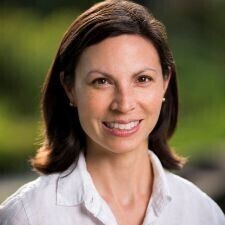
Rebecca Tinio McKenna, University of Notre Dame
Rebecca Tinio McKenna is an Associate Professor in the Department of History at the University of Notre Dame. Her research centers on modern American social and cultural history and she is especially interested in the history of U.S. imperialism, political economy, and the intersections of capitalism and culture. Her first book, American Imperial Pastoral: The Architecture of US Colonialism in the Philippines (Chicago, 2017) was awarded the Myrna F. Bernath Book Prize by The Society for Historians of American Foreign Relations.
McKenna is currently at work on a history of the piano, a project supported by a National Endowment for the Humanities Fellowship. Rebecca teaches undergraduate courses on the Gilded Age and Progressive Era, Interwar U.S.A., U.S. social and cultural history, and the United in the World along with graduate courses on 20th century U.S. History and comparative empires.
She holds a Ph.D. and Master’s degree in History from Yale University and an American Studies degree from Barnard College at Columbia University.
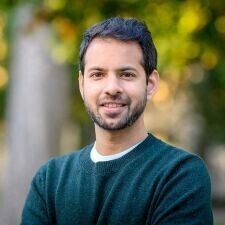
Nikhil Menon, University of Notre Dame
Nikhil Menon is a historian of modern South Asia. His research focuses on twentieth-century India, particularly histories of democracy, development, and diplomacy in independent India.
Menon’s first book, Planning Democracy: Modern India's Quest for Development (Cambridge University Press, 2022) reveals how India wedded western-style liberal democracy and Soviet inspired economic planning in the mid-twentieth century, when the Cold War pitted them as incompatible. It shows that planning enabled the establishment of independent India’s data infrastructure, through national surveys, statistics, and computers. Simultaneously, the rhetoric of ‘democratic planning’ led to the government engaging citizens through means as varied as films, plays, and even Hindu ascetics. Planning Democracy was awarded the Joseph W. Elder Prize by the American Institute of Indian Studies, and it was a finalist for the British Association for South Asian Studies' Book Prize. An article from this project, on India’s first computers, won the Mahoney Prize from the Society for the History of Technology. He is currently working on a book titled 'Status Anxiety: The Global Life of Indian Culture' exploring the ways in which postcolonial India deployed cultural diplomacy and sought global relevance through soft power.
Menon co-edited The Postcolonial Moment in South and Southeast Asia (Bloomsbury, 2018). His academic writing has appeared in journals such as the Journal of Global History, the Journal of the History of Ideas, Modern Asian Studies, the Indian Economic and Social History Review, and History Compass. He has also written for public audiences in the BBC, The Indian Express, The Hindu, and The Times of India among others outlets.
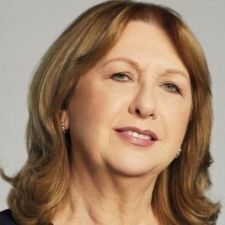
Mary McAleese, Chair, Ansari Institute Advisory Board
Mary McAleese was President of Ireland from 1997 to 2011 and the first President from Northern Ireland. Born in Belfast and raised in Ardoyne during the Troubles, she experienced first-hand the sectarian violence that shaped her lifelong commitment to peace, reconciliation, human rights and interreligious dialogue.
The theme of her presidency was “Building Bridges”, culminating in the historic State Visit to Ireland by HM Queen Elizabeth II in 2011, the first visit by a British monarch since Irish independence.
A lawyer, broadcaster and academic, she graduated in Law from Queen’s University Belfast and was called to the Bar of the Inns of Court of Northern Ireland and the King’s Inns Dublin. She later earned both a Licentiate and Doctorate in Canon Law from the Pontifical Gregorian University. Her academic appointments have included Reid Professor of Criminal Law, Criminology and Penology at Trinity College Dublin, Director of the Institute of Professional Legal Studies at Queen’s University Belfast, the university’s first female Pro-Vice-Chancellor, and Professor of Children, Law and Religion at the University of Glasgow.
McAleese is Chancellor of Trinity College Dublin, Chair of the Ansari Institute for Global Engagement with Religion at the University of Notre Dame and Patron of the Von Hügel Institute for Critical Catholic Enquiry at St. Edmund’s College, Cambridge. A founder member of Ireland’s Campaign for Homosexual Law Reform, she has long advocated for equality and social justice and played a prominent role in Ireland’s successful 2015 same-sex marriage referendum campaign.
She is the author of numerous books on law, religion and human rights, including Quo Vadis (2013), Children’s Rights and Obligations in Catholic Church Canon Law (2019) and Here’s the Story: A Memoir (2021).
Her honors include the Alfons Auer Ethics Prize awarded by the University of Tübingen and numerous honorary doctorates. She is married to Dr Martin McAleese and they have three children and two grandchildren.
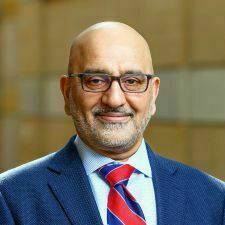
Ebrahim Moosa, University of Notre Dame
Ebrahim Moosa is Mirza Family Professor of Islamic Thought and Muslim Societies in the Keough School of Global Affairs at the University of Notre Dame. He co-directs, with Scott Appleby and Atalia Omer, Contending Modernities, the global research and education initiative examining the interaction among Catholic, Muslim, and other religious and secular forces in the world. He is a faculty fellow of the Keough School's Liu Institute for Asia and Asian Studies.
Moosa's interests span both classical and modern Islamic thought with a special focus on Islamic law, history, ethics and theology. His book What Is a Madrasa? was published in 2015 by the University of North Carolina Press. Moosa also is the author of Ghazali and the Poetics of Imagination, winner of the American Academy of Religion’s Best First Book in the History of Religions (2006) and editor of the last manuscript of the late Professor Fazlur Rahman, Revival and Reform in Islam: A Study of Islamic Fundamentalism. Other publications also include the co-edited book The African Renaissance and the Afro-Arab Spring (Georgetown University Press, 2015); Islam in the Modern World (Routledge, 2014), and Muslim Family Law in Sub-Saharan Africa: Colonial Legacies and Post-Colonial Challenges, (Amsterdam University Press, Spring, 2010).
Moosa holds a Ph.D. and M.A. from the University of Cape Town and a bachelor’s degree from Kanpur University in Kanpur, India.

Ely Oreggo-Torres, Lund University
Ely Orrego-Torres is an Ansari Institute Global Fellow and postdoctoral researcher at Lund University. Her research brings together international relations and political theory to explore the intersections of religion and politics in the global arena. She earned her Ph.D. in Political Science from Northwestern University in 2025. She is currently working on her first book, which examines the politics of religious freedom and secularism in the Americas between 2017 and 2023, with a focus on transnational and regional networks and the religio-spiritual actors participating in the Organization of American States (OAS). Her work has been published in journals including Social Compass and Philosophy and Global Affairs. Outside of academia, she is a passionate foodie who enjoys exploring new restaurants, experimenting with recipes, and trying street food from around the world.
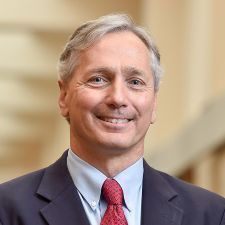
Gerard Powers, University of Notre Dame
Gerard Powers is director of Catholic peacebuilding studies for the Kroc Institute for International Peace Studies in the Keough School of Global Affairs at the University of Notre Dame. He is also coordinator of the Catholic Peacebuilding Network, which links twenty-two bishops’ conferences, Catholic development agencies, universities, and independent peace organizations in an effort to enhance the study and practice of conflict prevention, conflict management, and post-conflict reconciliation in war-torn areas.
Powers specializes in the ethics of the use of force; religion, conflict and peacebuilding; and ethics and US foreign policy. He is co-editor (with C. Montevecchio) of Catholic Peacebuilding and Extractives (Routledge, 2022), co-editor (with R. Schreiter and S. Appleby) of Peacebuilding: Catholic Theology, Ethics and Praxis (Orbis, 2010); and co-editor (with D. Philpott) of Strategies of Peace: Transforming Conflict in a Violent World (Oxford 2010). From 2011-2015, he served on the Religion and Conflict Sub-Group of the U.S. State Department Religion and Foreign Policy Working Group.
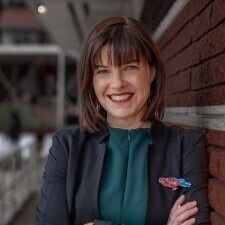
Erin K. Wilson, University of Groningen
Erin K. Wilson is Professor and Chair of Politics and Religion in the Faculty of Religion, Culture and Society at the University of Groningen, The Netherlands. Her research examines the hidden, unconscious assumptions about what “religion” is and does that permeate collective consciousness across multiple contexts, exploring how these assumptions impact (often detrimentally) policy and decision-making across diverse institutions in the public sphere, at national and global levels. She is passionate about social justice, human rights, and building inclusive sustainable societies.
Wilson has over a decade’s experience as a speaker and trainer for various foreign affairs and security agencies. These have included the European External Action Service, the Dutch Foreign Ministry, the UK Foreign Commonwealth and Development Office, the Danish Ministry of Foreign Affairs, the Australian Department of Foreign Affairs and Trade and NATO Defense College in Rome. She served as advisor to the Transatlantic Policy Network on Religion and Diplomacy from 2017-2025. She is a regular research partner and speaker for civil society organisations, in addition to her award-winning teaching and research. Professor Wilson holds a PhD in Political Science from the University of Queensland. Her books include After Secularism: Rethinking Religion in Global Politics (2012, Palgrave Macmillan); Justice Globalism: Ideology, Crises, Policy (with Manfred B. Steger and James Goodman, 2013, Sage) and Religion and World Politics: Connecting Theory with Practice (2022, Routledge).