Utopias and Their Pursuits: Biographies
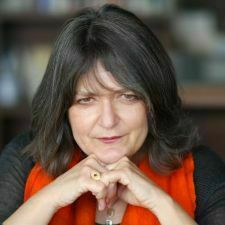
Chloe Balla is Professor of Ancient Philosophy at the University of Crete, and President of KELKIP (Center for Ancient Greek and Chinese Civilizations: www.kelkip.gr). She has published numerous articles on Plato, the Sophists and Ancient Medicine, a translation of Aristotle's Constitution of the Athenians (in Modern Greek, with an introduction and comments, co-authored with R.W. Wallace) and has co-edited proceedings of conferences she has co-organised, including Plato's Academy: Its Workings and its History (Cambridge U. Press, 2020).

Alexander D. Beihammer studied at the University of Vienna. From 2001 to 2015, he taught Byzantine history at the University of Cyprus. Since 2015, he has been the Heiden Family College Professor of History at the University of Notre Dame. Alexander Beihammer’s research interests include Byzantine diplomatics, cross-cultural exchanges between Byzantium and the Muslim world, and Byzantine-Latin relations in the Eastern Mediterranean. His most recent monograph is Byzantium and the Emergence of Muslim-Turkish Anatolia, ca. 1040-1130 (London and New York: Routledge, 2017). He is currently working on the political and social transformation of Western Asia Minor from Byzantine to Ottoman times.

Federico Brusadelli is Assistant Professor of Chinese History at the University of Naples L'Orientale (Italy). His research focuses on the history of Chinese political thought with a special interest in the "history of concepts" from the end of the Qing to the 21st century. His book on the political philosophy of Kang Youwei (1858-1927) - Confucian Concord - was published in 2020 by Brill. He is a Fellow of the Royal Historical Society and Managing editor of the journal Ming Qing Yanjiu.

Liang Cai is the Ruth and Paul Idzik Associate Professor in Digital Scholartship at the University of Notre Dame’s Department of History. She specializes in Chinese political, legal, and intellectual history and focuses on Qin-Han dynasties (221 BCE–23 CE), the fountainhead of Chinese civilization. Dr. Cai’s publications cover Confucianism, bureaucracy, law, social networks, and archaeologically excavated manuscripts. Collaborating with computer scientists, Dr. Cai has been engaged in a digital humanities project that aims to create a structured biographical data and social network analysis of early Chinese empires. Among Dr. Cai’s other areas of research and teaching expertise are classical Chinese thought, China in world history, early imperial China, legal history, digital humanities, and legacy of Chinese empires in contemporary China and global communities. Dr. Cai’s first book Witchcraft and the Rise of the First Confucian Empire contests long-standing claims that Confucianism came to prominence with the promotion of Emperor Wu in the Han dynasty. Her second book, Convict Politics: From Utopia to Serfdom in Early China (221 BCE–23 CE), explores newly excavated manuscripts alongside traditional sources, contextualized through data on officials extracted from textual narratives.

Levi Checketts is Assistant Professor of Religion and Philosophy and Associate Director for the Centre for Applied Ethics at Hong Kong Baptist University. His research focuses on social ethics, particularly the intersection of economic, technological and ecological concerns through the perspectives of Catholic theology and critical theory. He is the author of Poor Technology: Artificial Intelligence and the Experience of Poverty. And the editor of Social and Ethical Considerations of AI in East Asia and Beyond, Theology and Technology, and What Went Wrong with the West: Carl Mitcham's Critique of Western Philosophy of Technology. He is the lead editor for a special collection on Asian approaches to AI ethics AI & Society. Professor Checketts has published work in Religions, NanoEthics, The Journal of Moral Theology, Theology and Science, and Techné: Research in Philosophy and Technology, among other places. When not teaching or researching, Professor Checketts likes hiking around Hong Kong, traveling to other countries and spending time with his eight-year-old daughter. He is also co-president of the Notre Dame Club of Hong Kong, who won the Global Spirit Award at this year’s annual alumni conference.
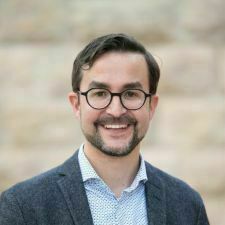
Simon Wolfgang Fuchs is Associate Professor of Islam in South Asia and the Middle East at the Hebrew University of Jerusalem where he teaches in the Departments of Asian Studies and Islamic/Middle Eastern Studies. His interests revolve around the global repercussions of the Iranian Revolution, transnational Islamic connections between the Middle East and South Asia as well as global Islam. He received his PhD in Near Eastern Studies from the University in Princeton in 2015 and was subsequently a research fellow in Islamic Studies at Gonville & Caius College, Cambridge, and a lecturer in Islamic and Middle Eastern Studies at the University of Freiburg, Germany. He is the author of In a Pure Muslim Land. Shi’ism between Pakistan and the Middle East (University of North Carolina Press 2019, Winner of the Inaugural Book Award of the South Asian Muslim Studies Association) and co-editor (together with Thomas Pierret) of Utopianism in the Middle East and North Africa (Edinburgh University Press 2025). Simon’s articles have appeared in Modern Asian Studies, the Journal of the Royal Asiatic Society, Welt des Islams, Islamic Law and Society, South Asia: Journal of South Asian Studies, and elsewhere. Since 2024, he has been a frequent commentator in German media on developments in Israel, Palestine and the wider Middle East. Simon has done fieldwork in Pakistan, India, Iran, Iraq, Egypt, Lebanon and Tunisia, drawing on material in Arabic, Persian, and Urdu. He is an alumnus of the German Young Academy.

Paul Hosle received his BA from Oxford University where he studied Classics and Biblical and Rabbinic Hebrew. He subsequently received a MA degree from University of Chicago Divinity School, followed by another MA degree in Chinese Philosophy from Fudan University. Currently, he is a non-degree research student at the Academy of Korean Studies in Seongnam, South Korea. Together with Dr. Biyun DAI, he co-authored the first English translation of Jesuit missionary Giulio Aleni’s Wanwu zhenyuan 萬物真原 (The True Source of the Myriad Things, 1628), published by Palgrave Macmillan in 2024. Additionally, he has published over twenty articles in journals such as Harvard Studies in Classical Philology, Vetus Testamentum, Vigiliae Christianae, Dao: A Journal of Comparative Philosophy, and Monumenta Serica. Most recently, he has been producing a translation (with introduction and commentary) of various texts by the late Joseon-dynasty Confucian thinker Dasan Jeong Yagyong.

Vittorio Hösle is the Paul Kimball Professor of Arts and Letters in the Dpt. of German, Slavic, and Eurasian Studies, Philosophy, and Political Science. He studied Philosophy, Classics, and Sanskrit because he was both interested in the "ultimate questions" and wanted to understand the answers that earlier civilizations gave to them. He has taught at Notre Dame since 1999, where he founded the Notre Dame Institute for Advanced Study.

Shiping Hua is Calvin & Helen Lang Distinguished Chair in Asian Studies, Director of the Asian Studies Program, and Professor of Political Science at the University of Louisville, the United States of America. Dr. Hua specializes in Chinese political culture and legal culture. He has published four solo-authored books in English: (1) The Chinese Dream and Law: The Third Surge of Utopianism (2012-2024), The State University of New York Press, August 2025; (2) Chinese Legal Culture and Constitutional Order, Routledge, 2019. The book is the winner of “Best Publication Award for Original Research,” Association of Chinese Professors in Social Sciences (USA). It was also nominated “The Peter Gonville Stein Book Award” that is awarded annually for the best book in non-US legal history written in English. (3) Chinese Utopianism: A Comparative Study of Reformist Thought with Japan and Russia (1898-1997), Stanford University Press/Wilson Center Press, 2009. Choice ranks this book as four-star “Essential.” (4) Scientism and Humanism: Two Cultures in Post-Mao China (1978-1989), State University of New York Press, 1995. He has also published 12 edited books in English and 3 edited books in Chinese. In addition, Dr. Hua has served as the editor/co-editor of four book series: “Routledge Studies in Comparative Asian Politics;” “Asia in the New Millennium,” University Press of Kentucky; “Contemporary World’s Academic Classics: Political Science Series,” Renmin University Press; “China Studies: International Outlook,” City University of Hong Kong Press. More than 60 titles have been published under these series.
He was a Visiting Fellow with the East West Center (1990-95) and Woodrow Wilson Center (2004-05). Dr. Hua has had extensive academic collaborations with China. He worked in the research project “Legislative Reforms in China,” (2006-2011), in collaboration with the Central Party School of China. He had taken American students to China for a one-month study tour in the summer for 15 consecutive years before the pandemic, working with Peking University, Renmin University, Shanghai Jiaotong University, and Xi’an International Studies University. He held honorary professor/fellow titles with these universities. While on sabbatical with University of Louisville, he was a Visiting Fellow with the School of International Studies at Peking University (2010).

Alexander O. Hsu is an assistant teaching professor of global affairs in the Keough School of Global Affairs at the University of Notre Dame. He is an academic advisor at the Ansari Institute for Global Engagement with Religion and also the director of undergraduate studies at the Liu Institute for Asia and Asian Studies. His research focuses on early Buddhist scriptures in medieval China and employs perspectives from manuscript studies, genre theory, and cultural history in order to examine how the use of texts reflects transformations in religious reading practices. Hsu’s current book project examines why and how medieval Chinese Buddhists used anthologies to “economize” their gigantic scriptural canon.

Jinyu Liu has her PhD from Columbia University and is the Betty Gage Holland Professor of Roman History at Emory University. Before that, she was a professor of Classics at DePauw University and has been a Distinguished Guest Professor at Shanghai Normal University since 2014. Her research interests include social relations in Roman cities, the non-elite in the Roman Empire, Latin epigraphy, the reception of Graeco-Roman classics in China, as well as translating classical texts in a global context. She is the author of the monograph Collegia Centonariorum: The Guilds of Textile Dealers in the Roman West (Brill, 2009), and coedited (with Thomas R. Blanton IV and Agnes Choi), Taxation, Economy and Revolt in Ancient Rome, Galilee, and Egypt (Routledge, 2022) and (with Thomas Sienkewicz), Ovid in China: Reception, Translation, and Comparison (Brill, 2022). Her book An Introductory Research Guide to Roman History (in Chinese) was first published by Peking University in 2014 and the second, expanded edition came out in 2021. She is the editor of a two-volume book entitled New Frontiers of Research on Ovid in a Global Context (in Chinese; Peking University Press, 2021). She was a recipient of an Andrew W. Mellon Foundation’s New Directions Fellowship (2011-2014) and a Loeb Classical Library Foundation Fellowship (2018-2019). She has been organizing the Guangqi Classics Lecture and Seminar Series in China since 2015 and has been the Principal Investigator of “Translating the Complete Corpus of Ovid into Chinese with Commentaries,” a multi-year project sponsored by a National Social Science Fund of China Major Grant. In Fall 2025, She is a member of the Institute for Advanced Study in Princeton for a project titled “Outsiders in Town: Mobility, Exclusion, and Negotiation in the Roman West (First – Third Centuries CE).”
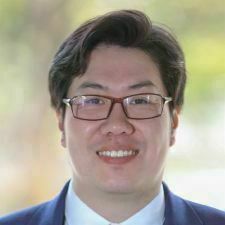
Zhao Lu 趙璐 is an Associate Professor of Global China Studies at NYU Shanghai and a Global Network Associate Professor at NYU’s Faculty of Arts and Science. A historian of early China educated at the University of Pennsylvania, his research examines the unorthodox and imaginative dimensions of Chinese intellectual history. He is particularly fascinated by how ideas of the future—from utopian visions to prophecies and divination—shaped political and cultural life. This is reflected in his first book on a newly discovered divination text, Stalk Divination: A Newly Discovered Alternative to the I Ching (Oxford, 2017), co-authored with Constance Cook, and extends through his single-authored monograph, In Pursuit of the Great Peace (SUNY, 2019), to his latest book, Weird Confucius (Bloomsbury Academic, 2024), which challenges conventional portrayals of the sage by exploring his eccentric and supernatural legacy.

Keith N. Knapp (南愷時) is a Professor of History at The Citadel in Charleston, South Carolina, USA. He earned his B.A. in History and Asian Studies at State University of New York, Albany, and his M.A. and Ph.D. in East Asian History at University of California, Berkeley. He has authored Selfless Offspring: Filial Children and Social Order in Medieval China (University of Hawai’i Press, 2005) and co-edited Early Medieval Chinese Texts: A Bibliographic Guide (Institute of East Asian Studies, 2015) and the Cambridge History of China: Volume 2, The Six Dynasties, 220-589 (Cambridge University Press, 2019). He has penned 43 journal articles and book chapters. His areas of research include the social and cultural history of medieval China (100-1000 CE), early and medieval Confucianism, Chinese filial piety, animals in ancient Chinese thought and social life, Chinese premodern material culture, and Utopian thought in early and medieval China. His most recent publications are “Conveniences and Hierarchy Create Social Order: Ge Hong’s 葛洪 (283-343) Attack on Bao Jingyan’s 鮑敬言 Anarchism” (Monumenta Serica 73, no. 1, 2025), “People are Special, Animals are Not: An Early Medieval Confucian’s Views on the Difference between Humans and Beasts” (Confucian Philosophy and Culture 41, 2024), and “Chinese Treasures Buried in Private Japanese Libraries: Popular Confucian Works known as Accounts of Filial Children” (in East Asia beyond the Archives: Missing Sources & Marginal Voices, 2023).
Formerly, he was the president of the Early Medieval China Group. He presently chairs the Southeast Early China Roundtable and is an executive board member of both the T’ang Studies Society and the Elling Eide Center. In China, he is a Concurrent Researcher at Nanjing University’s Center for Cooperation and Innovation in Chinese Literature and East Asian Civilization, a Chair Professor of Wutong Sinology at Beijing Language and Culture University, an Academic Advisor to Nanjing University’s Research Institute on the Six Dynasties, a Honorary Visiting Professor at Handan College, and a Honorary Board Member of the Academic Association of the History of Early Medieval China (魏晉南北朝史學會).

Guangyi Li is professor of Chinese and Comparative Literature, Doctoral Supervisor, and Vice Dean of the Liberal Arts (Boya) College/Institute for Advanced Studies in Humanities and Social Sciences at Chongqing University and Director of the Research Center for Science Fiction and Techno-Humanities and Executive Director of the Research Center for World Literature and the History of Ideas, and Adjunct Professor at Maynooth University, Ireland. His research spans modern and contemporary Chinese literature, comparative literature and world literature, science fiction and culture, and utopian literature and thought. He serves as the editor-in-chief of The Forty-Two Histories of Science Fiction Studies book series (Chongqing University Press), Compendium of Chinese Science Fiction Literature: Late Qing Volume (a National Publication Foundation-funded project), Science Fiction Humanities (an academic journal), and Science Fiction Research Newsletter (a fellow netzine). His honors include the Jamie Bishop Memorial Award from the International Association for the Fantastic in the Arts, the Outstanding Paper Award from Modern Chinese Literature Studies, the Science Fiction Educationalist Award of the Fishing City Science Fiction Awards, and multiple Chinese Nebula Awards (Global Chinese Science Fiction Awards), among other academic and teaching recognitions.
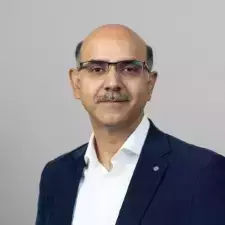
A. Azfar Moin studies the early modern Islamic world from comparative perspectives with a focus on concepts and practices of sovereignty. He is the author of The Millennial Sovereign: Sacred Kingship and Sainthood in Islam (Columbia University Press, 2012) and the co-edited volume with Dr. Alan Strathern, Sacred Kingship in World History: Between Immanence and Transcendence (Columbia University Press, 2022). He teaches courses on religious transformations in the early modern Islamic world, rituals and practice of sovereignty in Islam, and theory and method in the study of religion. He currently serves as a co-editor for Modern Asian Studies, published by Cambridge University Press.

Yuri Pines’s 尤銳 research focuses on early Chinese political thought, traditional Chinese political culture, early Chinese historiography, history of preimperial (pre-221 BCE) China, and comparative studies of imperial formations worldwide. His English monographs include China’s Aristocratic Age: Politics and Power in the Springs-and-Autumns Period (Princeton UP, 2026); Zhou History Unearthed: The Bamboo Manuscript Xinian and Early Chinese Historiography (Columbia UP, 2020); The Book of Lord Shang: Apologetics of State Power in Early China (Columbia UP, 2017); The Everlasting Empire: The Political Culture of Ancient China and Its Imperial Legacy (Princeton UP, 2012); Envisioning Eternal Empire: Chinese Political Thought of the Warring States Era (Honolulu, 2009), and Foundations of Confucian Thought: Intellectual Life in the Chunqiu Period, 722-453 BCE (Honolulu, 2002). Pines edited The Dao Companion to China’s fa Tradition (Springer, 2024) co-edited with Martin Kern and Nino Luraghi Zuozhuan and Early Chinese Historiography (Brill, 2023); with Michal Biran and Jörg Rüpke, The Limits of Universal Rule: Eurasian Empires Compared (Cambridge, 2021) and Empires and Gods—Religions’ Role in Imperial Histories (de Gruyter, 2024), with Li Wai-yee, Keywords in Chinese Culture (Hong Kong: CUP, 2020) with Paul R. Goldin and Martin Kern the Ideology of Power and Power of Ideology in Early China (Brill, 2015), and with Lothar von Falkenhausen, Gideon Shelach and Robin D.S. Yates the Birth of an Empire: The State of Qin revisited (Berkeley, 2014).

Ori Tavor is a Senior Lecturer in Chinese Studies and Director of the MA Program at the department of East Asian Languages and Civilizations, the University of Pennsylvania. His research focuses on Chinese religious and intellectual history. His previous work on ritual theory, bio-spiritual regimens, and the role of the body in early and medieval Chinese religious culture has been published in Dao: Journal of Comparative Philosophy, Studies in Chinese Religions, Journal of Ritual Studies, and Body & Religion. His current research project examines the role of traditional Confucian, Daoist, and Buddhist models of an ideal society on 21st century Chinese utopianism. His recent article on the late contemporary Chinese utopian thinker Zhang Xianglong has been recently published in Utopian Studies.

Xueying Wang is assistant professor at the University of Notre Dame. She received her PhD from the University of Notre Dame in 2014. Before she came to Notre Dame, she studied medieval literature at Beijing University. Her research focuses on Sino-European intercultural exchanges in late imperial China.

Ying Zhang holds a joint PhD in History and Women’s Studies from the University of Michigan. She taught in the History Department at the Ohio State University before joining the Institute for Area Studies at Leiden University as Leiden Professor of Chinese History. Her research interests include premodern Chinese political culture, bureaucracy, gender and family, and literati culture. She is the author of two book-length publications: Confucian Image Politics: Masculine Morality in Seventeenth-Century China (University of Washington Press, 2016) and Religion and Prison Art in Ming China (1368-1644) (Brill, 2020), and is co-editor of a Chinese volume Nanxing yanjiu [Masculinity Studies] (Shanghai Sanlian chubanshe, 2012). Her new monograph, Ideals of Confinement: Bureaucratic Discipline and Society in Ming China (1368-1644), is forthcoming with Cambridge University Press.
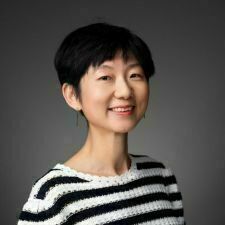
Ya Zuo is an associate professor of History at University of California, Santa Barbara. She is a cultural historian of middle and late imperial China, and the author of Shen Gua’s Empiricism (Harvard Asia Center, 2018). Driven by interdisciplinary interests, she has written a range of articles on topics such as theory of knowledge, sensory history, medical history, book history, and the history of emotions. She is currently working on a book on crying and tears in middle-period China.