News » Interviews

Andrew Dickson: Religious Engagement in Contemporary British Foreign Policy

Author: Rebekah Go

Picture of a Caucasian male with shortish brown hair. He is looking at the camera with a slight smile.

Andrew Dickson is an Ansari Institute Global Fellow who recently completed an ESRC-funded PhD in International Relations at the University of Sussex, where he served as Programme Coordinator for the University's Religion and Foreign Policy Initiative. His research explores religion and secularism in International Relations across foreign and development policy, de-radicalisation programmes, and human rights advocacy. He also holds an MA in Conflict, Security and Development from King’s College London, and a BA in Philosophy, Politics and Economics from Hertford College, Oxford. He was previously Centre Manager for the LSE Faith Centre and Religion and Global Society Research Unit, and Research and Projects Manager for the Lokahi Foundation.

Read More about Andrew Dickson: Religious Engagement in Contemporary British Foreign Policy

Dina Osama Lotfy: Religious Institutions Stances Toward Autocratization

Author: Rebekah Go

Photo of a woman receiving an award in front of a large picture of herself. The woman is wearing a hijab and smiling at the camera.

Dr. Dina Osama Lotfy is an Ansari Institute Global Fellow and currently an Assistant Professor of Political Science at Cairo University. Her research focuses on autocratic transitions, religion and politics, and terrorism. She earned her B.A., M.Sc., and Ph.D. in Political Science from Cairo University.…

Read More about Dina Osama Lotfy: Religious Institutions Stances Toward Autocratization

Thahir Jamal Kiliyamannil: Formations of the Muslim Minority in India

Author: Rebekah Go

Picture of an Indian man next to a tall concreate spire. He is wearing jeans and a long sleeve button up with the sleeves rolled up.

Dr. Thahir Jamal Kiliyamannil is an Ansari Institute Global Fellow who recently completed his PhD at the University of Hyderabad, India. His doctoral thesis, titled “Islam, State, and Sovereignty: Genealogy of Muslim Subject Formation in Malabar,” traces the minoritization of Muslims in India,…

Read More about Thahir Jamal Kiliyamannil: Formations of the Muslim Minority in India

Ely Orrego Torres: Transnational Religio-Spiritual Networks

Author: Rebekah Go

A picture of a woman with long dark hair, glasses, and a blue shirt with flowered overlay. The woman is standing with her hand resting on a sill.

"In my dissertation, I studied the politics of religious freedom and secularism in the Americas between 2017 and 2023. I focus particularly on transnational and regional networks that I call “Transnational Religio-spiritual Networks (TRSNs)”. In particular, I research these networks in one venue, which is an international organization, the Organization of American States, the OAS.

Read More about Ely Orrego Torres: Transnational Religio-Spiritual Networks

Jacob Katumusiime: How do we explain the violence of some religious movements?

Author: Rebekah Go

Dr. Jacob Katumusiime is Ansai Institute Global Fellow and a Postdoctoral Fellow at the University of Johannesburg. Jacob is the 2024 Winner of the Rahamon Bello Award for the Best PhD in African and Diaspora Studies. He researches on the intersections of Culture and Politics, navigating questions…

Read More about Jacob Katumusiime: How do we explain the violence of some religious movements?

Jethro Calacday: U.S. empire facilitated by the Catholic Church

Author: Rebekah Go

Image of a southeast Asian man holding a book and standing in front of a staircase. He is wearing a mock turtle neck, blazer, and glasses.

Dr. Jethro A. E. A. Calacday is an Ansari Institute Global Fellow and a scholar of global history whose research explores the entanglement of religion and empire in the making of the modern world. He works on the histories of the US in the World, the Philippines, Papal diplomacy, global Catholicism,…

Read More about Jethro Calacday: U.S. empire facilitated by the Catholic Church

Nirvikar Singh: We're Going to Stand Up for Ourselves and for Anybody Who Needs Support

Author: Rebekah Go

"So, the external markers of Sikhism date to Guru Gobind Singh, where he says, “you are going to be fearless. And to be fearless, you are going to stand out. You can never deny who you are.” In simplified language, that's the origin of the uncut hair and turban for men, and to some extent, for women. The sword, another such marker, all Sikhs would agree, is a symbol of self-defense, but also of standing up against oppression of any kind. Now from there things got worse in the sense that a succession of Mughal rulers or officials tried to wipe out the Sikhs. Guru Gobind Singh lost all four of his sons in this struggle for survival. Sikhs’ external markers come from that struggle, and have been reinforced by it. “We're going to stand up for ourselves and for anybody who needs support.”"

Read More about Nirvikar Singh: We're Going to Stand Up for Ourselves and for Anybody Who Needs Support

Matthew Cressler: So Many Catholics Who Have Engaged in Racial Justice Work Have Been Labeled "Bad Catholics"

Author: Rebekah Go

"You also were asking where the title Bad Catholics, Good Trouble came from and you're right, there's a story there. It actually starts with an academic article that I wrote for the journal Religion and American Culture. And that article was about the hundreds and hundreds of white Catholics in Chicago who wrote letters to the Archdiocese to express how outraged they were that the Church was supporting the civil rights movement. And the people who wrote these letters - many of which were overtly racist and explicitly endorsing violence against civil rights activists or, at the very least, resisting integration - were insisting they were 'real good and sincere Catholics.'"

Read More about Matthew Cressler: So Many Catholics Who Have Engaged in Racial Justice Work Have Been Labeled "Bad Catholics"

Margie Pfeil: I Would Love to Have a Constructive Dialogue About Distributive Justice

Author: Rebekah Go

At the root of the Catholic Worker here locally is our work on housing. I firmly believe that housing is a human right and human duty that serves the common good. Everyone ought to be housed and if we all came together as human beings - or even just here in this local community of South Bend together with Notre Dame - we could house everyone who needs to be housed. There's an invitation in the Catholic social tradition to see these basic issues of need and vulnerability through a lens of God's abundant provision.

Read More about Margie Pfeil: I Would Love to Have a Constructive Dialogue About Distributive Justice

Rev. Dr. Michael Nabors: Civic Engagement Lets Me See the Work of God in Human Affairs

Author: Rebekah Go

"Just last night I was on the campus of Northwestern speaking to a group of students and many of them were the protest leaders, and I shared with them that the key to moving the world forward is finding common ground. When you find common ground, that's the only way that you can move to higher ground. You can't get to higher ground all by yourself. I also shared with them that I was very proud of them and the college president for coming to an agreement to end the protest and to honor many of the requests that the protesters were asking for. For example: hiring Palestinian faculty members, having scholarships for Palestinian students, building a house for Muslims on campus, just like there's a house for black students and of course the Jewish faith has its own house. The Catholic faith has its own house. So you know, I thought all of that was just important. A wonderful model for what is going on with other college campuses around the country."

Read More about Rev. Dr. Michael Nabors: Civic Engagement Lets Me See the Work of God in Human Affairs

Mary McAleese: Politics of the Sacred and the Necessity for Respectful Discourse

Author: Rebekah Go

"I have to say, I come from a church that is always talking about evangelism and the Protestant churches in Northern Ireland are very proselytism driven and evangelism driven. It is not a good mix. Because they engage with you for the purpose of converting you. “I want to make you me, and when you are me and you accept my politics and my religion, we will all be happy.” Well, that is not a decent way to behave. That is outrageously unsympathetic to people's human rights, to their conscience, to their opinions, their beliefs, their right to believe whatever they want to believe. So when I was the President of Ireland I said from the very beginning, I have no interest in proselytism. I have no interest in evangelism. I am not inviting people to my home, the President's home, for a photo opportunity. I want to build friendships."

Read More about Mary McAleese: Politics of the Sacred and the Necessity for Respectful Discourse

Matt Graybill: Peacebuilding in the Holy Land Leads to Peacebuilding at Home
Author: Rebekah Go

"I think when you start to see the heart of people, you realize the same parts or the same hurts or the same thought process – while they might look different overseas – they're very similar to what we have here. So I think how people are responding to immigration or homelessness or race, if we really open our eyes and have an honest look, we have a lot of those same walls. They might not be physical walls like I saw in Israel and Palestine but, there are walls in our communities, in our cities, and in our families that have been erected, many times for generations."

Read More about Matt Graybill: Peacebuilding in the Holy Land Leads to Peacebuilding at Home

Gabriel Reynolds: Islam Can Be a Real Gift to Christians

Author: Rebekah Go

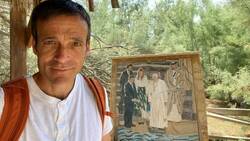
Gabriel Said Reynolds, A man with short brown hair and light skin, wearing a white shirt, stands outdoors with trees and greenery behind him. A framed religious artwork is seen in the background

"In a special way, practicing Muslims show fidelity to things like modesty, regular prayer, how to eat, what to eat, not drinking alcohol, and what to wear. Christians have our own teachings, so the way that we work through things will look different - I'm not saying we should just imitate Muslims. But Islam can be a gift for Christians just by the faithfulness that we see in Muslims and the way they manage to be religious in America."

Read More about Gabriel Reynolds: Islam Can Be a Real Gift to Christians

Celene Ibrahim: Islam's Internal Diversity and the Value of a Diverse Body Politic

Author: Rebekah Go

"There is maybe a naive kind of faith that I have in the human mind or the human heart to be capacious and compassionate enough to engage different perspectives without resorting to epistemic violence, or worse. But I think that this capacity, where it is not inherent in a person’s disposition, can come about through training and acculturation. The capacity to engage differences productively is born out of experience and encounters across differences that are positive and life-giving. That's what I'm trying to teach when I do interreligious work or when I write in the field of interreligious studies."

Read More about Celene Ibrahim: Islam's Internal Diversity and the Value of a Diverse Body Politic
Sarah Shortall: French History, Human Rights Discourse, and the Underappreciated Influence of Catholic Theology

Author: Rebekah Go

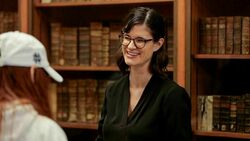
Sarah Shortall, an image of a woman with dark hair, wearing glasses and a black blouse. She is smiling while engaged in conversation with another person whose back is turned to the camera. The background consists of wooden bookshelves filled with books.

"I think this can help us to understand the suspicion with which so many Catholics have long regarded the liberal rights tradition. It was expressed most recently by Pope Benedict XVI, in an address to the UN in 2008, when he warned against a relativistic and subjective conception of human rights that divorces them from their ethico-religious foundation and reduces them to mere legal instruments. It also helps us to understand a more general tension that I think exists within Catholic social teaching, between a robustly theological ethics and one that doesn't presuppose Christian faith. The disagreement between Maritain and de Lubac is a case in point of this tension, and it affects how Catholics relate to secular political or legal projects."

Read More about Sarah Shortall: French History, Human Rights Discourse, and the Underappreciated Influence of Catholic Theology

Liang Cai: Confucianism, Digital Humanities, and Changing History

Author: Rebekah Go

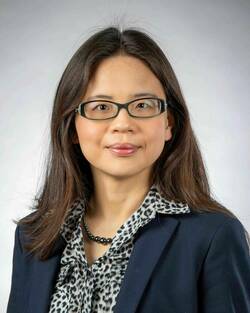
Liang Cai Headshot, a woman with long, dark brown hair wearing glasses and a navy blue blazer over a patterned blouse. She has a composed expression and is looking directly at the camera against a gray backdrop.

"First, how do we understand the term “religion”? The concept of religion originates from the West. Often when people think about religion, their experiences are with Christianity, Judaism, or Islam. In both the academic world and daily life, people's perception of religion is primarily based on their Western experiences. It's very difficult to say that Confucianism resembles religions in the West. If evaluated by conventional criteria, Confucianism could never be counted as a religion. Confucians don't worship a god, nor do they have an organized church. The Confucian community is relatively informal. People generally self-identify as Confucians. There is no organization such as a church to sanction your membership, nor is there a ritual ceremony like baptism to symbolize regeneration and admission to Confucianism. So, Confucianism is not a religion in the Western sense."

Read More about Liang Cai: Confucianism, Digital Humanities, and Changing History

Olivia Wilkinson: Faith in Development, There is Still a Lot of Research to Be Done

Author: Rebekah Go

"We know from all religious studies research, that religion is integrated in every other aspect of society - the social, the cultural, the political, the economic, and so truly being able to say it's the religious piece that made the difference is very hard to do. Moreover this hasn't been a field where there's been a lot of funding for research. So we're at a place where we're searching for the middle ground. We're not trying to prove definitively that there's one number that will say yes or no about faith Impact. But we are saying that we would benefit from more quantitative research; we would benefit from more mixed methods research."

Read More about Olivia Wilkinson: Faith in Development, There is Still a Lot of Research to Be Done

Karrie Koesel: Authoritarianism, Electoral Autocracies, and Democratic Backsliding

Author: Rebekah Go

"The important thing to remember is that democratic backsliding is a process, and that it is incremental. Backsliding happens piece by piece. It could be legislation that targets journalists or undermines the free speech of opposition groups. Democratic backsliding doesn't happen overnight. It is piecemeal, this is why it is so dangerous because the changes are incremental and, therefore, easy to overlook. Over time, however, democratic erosion builds until we arrive at a non-democratic system where the rules of the game have changed. These are the hybrid political systems where democratic institutions are hollowed out."

Read More about Karrie Koesel: Authoritarianism, Electoral Autocracies, and Democratic Backsliding
Natalie Avalos: Indigenous Religious Traditions Deserve to be Known and Valued

Author: Rebekah Go

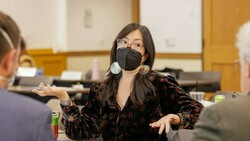
Natalie Avalos at the Faith in the Story conference in fall 2024, she is a woman with dark hair, wearing a black outfit and a protective face mask, sitting while she gestures with her right hand with people in the background listening.

"Even though I was studying Indigenous religious traditions in a religious studies program, one of the first things that I learned was that the category of religion was an imperfect category, in the sense that we often think of religion as attached to Western institutionalized religions. Native and Indigenous peoples don't have a word that's like religion in their own languages. That concept doesn't translate or correlate very easily. Instead, what they would say is, well, we have a life way or we have a worldview. And we have relationships with spiritual power and [we have] other than human persons that exist and are immanent in the world, and this correlates to what Westerners would call religion. And they, of course, would also say, it's “a way of life.” It's a way of ethical engagement with a greater world, with other people in your community. And so the category often has to be troubled a little bit, you know."

Read More about Natalie Avalos: Indigenous Religious Traditions Deserve to be Known and Valued